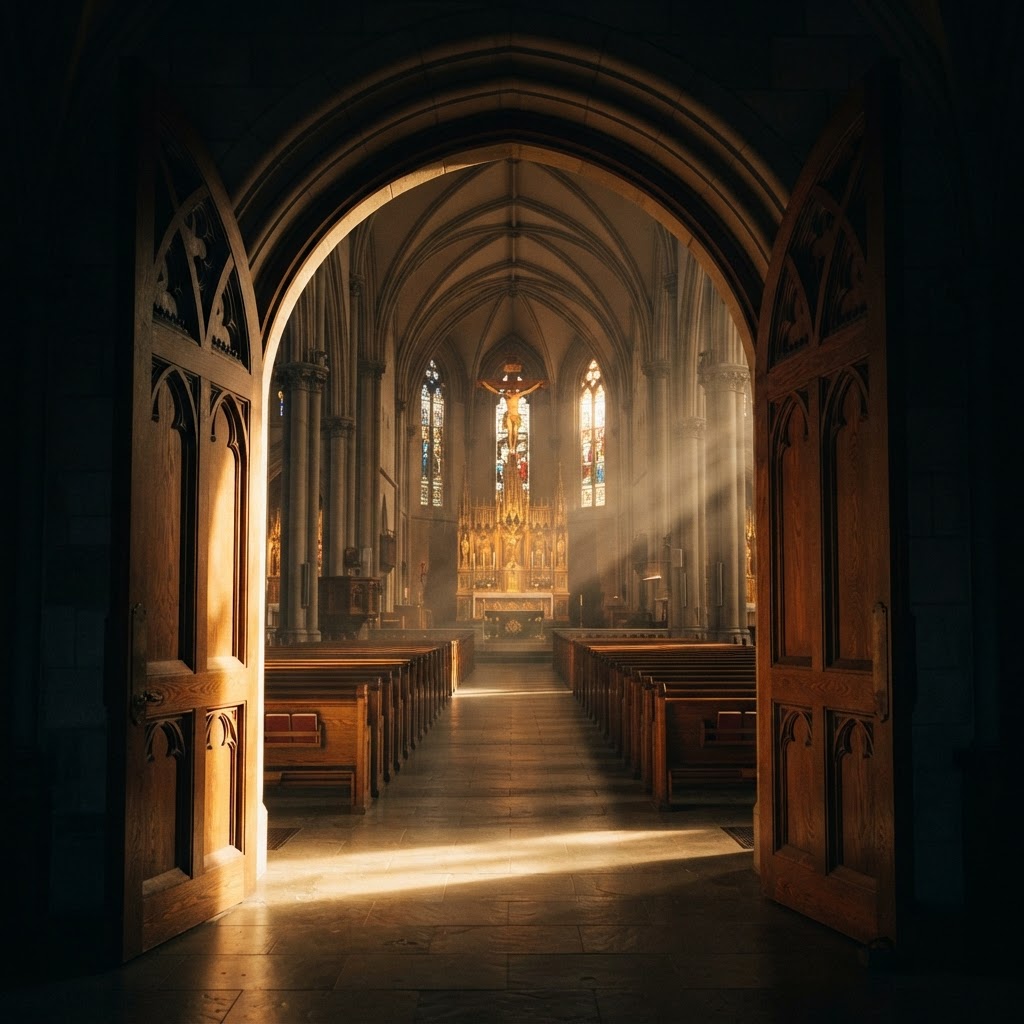
What Did the First Christians Believe?
Long before the Reformation, printing press or modern denominations, Christians were writing about their faith.
When someone begins investigating Catholicism, an important question eventually appears:
What did the Christians closest to the Apostles actually believe?
The writings of the Early Church Fathers provide a remarkable window into Christianity during the first centuries after Christ.
What the Early Church Believed
The Eucharist
The earliest Christians believed the Eucharist was the true Body and Blood of Christ, not merely a symbol.
Bishops and Apostolic Authority
The early Church was governed by bishops who succeeded the Apostles, not by independent congregations.
Baptism
The early Church practiced Baptism as entry into Christian life — including for infants and households.
Confession
The early Church practiced sacramental confession of sins to priests and bishops.
Christian Worship
The early Christians gathered for liturgical worship, not informal gatherings.
Sunday Worship
The early Christians worshipped on Sunday, the day of the Resurrection, from the very beginning.
Apostolic Succession
The authority of the Apostles was passed down through the laying on of hands to bishops.
Faith and Works
The early Christians understood faith and works as inseparable — not faith alone.
Mary
The early Christians honored Mary as the Mother of God and sought her intercession.
Prayers for the Dead
The early Christians prayed for the dead, reflecting belief in purification after death.
Church Unity
The early Church understood itself as one visible, unified Church — not a collection of competing groups.
Featured Early Christian Voices
St. Ignatius of Antioch
c. 35–108Bishop of Antioch and disciple of St. John. His letters, written on the way to martyrdom in Rome, give witness to the Eucharist, the authority of bishops, and the unity of the Church.
St. Justin Martyr
c. 100–165A philosopher who converted to Christianity and wrote defenses of the faith. His First Apology contains one of the earliest descriptions of the Mass.
St. Irenaeus of Lyons
c. 130–202Bishop of Lyons who wrote Against Heresies, defending apostolic tradition and the unity of the Church against Gnostic teachings.
St. Clement of Rome
c. 35–99The fourth Pope, who wrote to the Corinthians around the year 96, exercising papal authority across the Mediterranean.
St. Cyprian of Carthage
c. 200–258Bishop of Carthage who wrote extensively on the unity of the Church and the role of bishops.
Tertullian
c. 155–220A prolific writer in North Africa who defended Christian practices and teachings, though he later joined a schismatic sect.
Origen
c. 185–254A scholar and theologian of Alexandria who wrote extensively on Scripture and Christian doctrine.
St. Augustine
354–430Bishop of Hippo and one of the most influential theologians in Christian history, writing on grace, the Church, the Sacraments, and the Trinity.
The Didache
c. 50–120An early Christian document (not a single author) that describes the teaching of the Apostles, including the Eucharist, Baptism, and moral instruction.
Christianity Before the Bible Was Bound Into One Book
The Christian Church existed, preached the Gospel, baptized converts, celebrated the Eucharist and handed on apostolic teaching before the New Testament existed as one universally recognized bound collection.
The Church did not "invent" the Bible. The biblical canon developed historically through the Church's recognition of inspired writings over time.
Continue Studying
Read the Church Fathers in their own words. Consult primary sources and official Church documents.
Scripture Reference Guide →Essential Prayers →Thinking About Becoming Catholic?
You don't have to have it all figured out before you begin.