Relics
Sacred Reminders. Holy Lives. A God Who Works Through the Physical.
New to Catholicism?
Relics aren't magic bones or lucky charms. They're sacred reminders of real, holy people — and they point to a God who has always worked through the physical world to draw us closer to Himself.
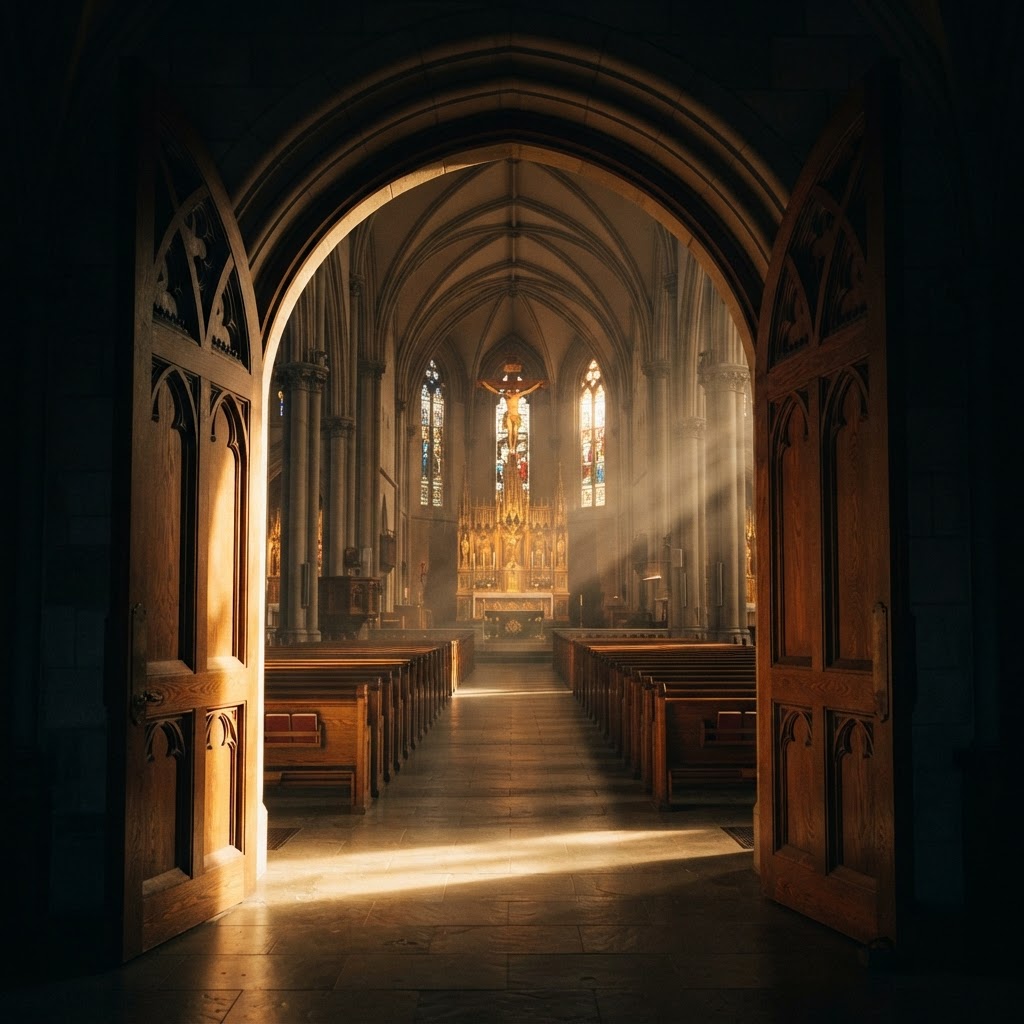
You may have visited a Catholic church and noticed a small metal container set into the altar, or a glass case holding a fragment of bone or a piece of cloth. You may have seen people pause, pray, or even kneel before it.
That object is called a relic. And behind it is one of the oldest and most misunderstood traditions in the Catholic Church.
If you are new to Catholicism, you might naturally wonder: What is it? Why is a piece of bone in a church? Do Catholics worship it? And what does this have to do with following Jesus?
Those are good questions.
Relics are not magic. They are not lucky charms. Catholics do not worship relics — worship belongs to God alone. A relic is a sacred reminder — a physical object connected to a saint or to Christ that helps us remember a holy life and turn our hearts toward God.
And behind this ancient practice is a beautiful truth: that the God who created the physical world has always used physical things to draw us closer to Himself.
What Are Relics?
A relic is a physical object associated with a saint or with Christ. The word comes from the Latin reliquus, meaning “left behind” — something that remains.
Relics can be many things: a fragment of bone, a lock of hair, a piece of a saint's clothing, a rosary they prayed with, or even an object touched to the tomb of a saint. Each one is a tangible connection to a real person who lived a holy life and is now believed to be with God.
The Catholic Church has honored relics since the earliest centuries. When the first Christians gathered for worship, they often did so near the tombs of the martyrs — those who had died for the faith. Those tombs became sacred places, not because the dead have power of their own, but because the lives of the martyrs pointed powerfully to Christ.
But Are Relics Magic?
No. This distinction is extremely important.
Relics are not magic bones or lucky charms. The Catholic faith condemns superstition — the idea that an object possesses some magical power independent of God. A relic points beyond itself.
Think about a treasured possession of someone you love who has passed away — a wedding ring, a letter, a favorite book. The object itself is not the person. But it reminds you of them, and holding it can turn your heart toward them. A relic works similarly. The bone or the cloth is not the saint. But it reminds us of the saint, and through the saint, it turns our hearts toward God.
And Catholics do not worship relics. We worship God alone. We honor relics as sacred reminders, the same way we honor a photograph of a loved one. The honor given to a relic passes to the saint it represents, and through the saint, to God Himself.
Do Catholics Worship Relics?
No.
Catholics worship God alone. Relics are sacred reminders of holy lives — honored, not worshipped — and they always point us toward Christ.
The Three Classes of Relics
The Catholic Church recognizes three classes of relics, each with a different kind of connection to the saint:
First-Class
First-Class Relics
Physical remains of a saint — typically a fragment of bone or, in rare cases, the entire body. These are treated with the highest reverence because they were part of a body made holy by God's grace and destined for the Resurrection.
Second-Class
Second-Class Relics
Objects a saint used or wore during life — a piece of clothing, a rosary, a book, a chair. These are honored because they were in contact with the saint and remind us of their holy life.
Third-Class
Third-Class Relics
Objects that have been touched to a first- or second-class relic. These are a way of extending the connection to the saint to many more people, especially for personal devotion.
Relics in Scripture
The honoring of relics is not a later invention. It is rooted in Scripture. From the bones of the prophets to the clothing of the Apostles, God has always worked through physical objects connected to His holy ones.
Why Honor Relics?
Catholics honor relics for many reasons. Some honor them to feel close to a favorite saint. Some honor them to ask for a saint's intercession. Some honor them simply because they need to be reminded that holiness is real — that ordinary men and women, with real bodies and real lives, have followed Christ all the way to Heaven.
And sometimes it becomes something even simpler: a reminder that the saints were real people. They were not characters in a story. They had bodies, homes, struggles, and hearts — just like us. A relic makes that truth tangible. It says: this person lived. This person loved God. And this person is now praying for you.
Relics and the Incarnation
At the deepest level, relics flow from the truth at the heart of the Catholic faith: the Incarnation — the belief that God became flesh. Jesus Christ was not a spirit or an idea. He was a real man, with a real body, who walked real roads and touched real people.
If God became physical, then the physical world matters. Bodies matter. Objects matter. The Catholic faith does not treat the material world as something to escape. It treats it as something God uses to reach us — through water (Baptism), through oil (Confirmation), through bread and wine (the Eucharist), and through the relics of His saints.
Relics are one more way of saying: God is not far away. He is here. And He works through the ordinary, physical world He created.
Do I Need to Be Catholic to Appreciate Relics?
No. Anyone can learn from the lives of the saints and reflect on the meaning of relics. You don't have to understand every Catholic teaching before you begin.
You can simply pray: “God, show me what it means to be holy. Help me to follow the example of the saints. If the Catholic faith is where You are leading me, give me the courage to follow the truth wherever it leads.” That is a beautiful place to begin.
A Simple Prayer
If you're reflecting on relics for the first time, you don't need an elaborate prayer. A simple prayer from the heart is a wonderful place to start:
God, make me holy
as Your saints were holy.
Help me to follow their example,
and to trust that You work
through the ordinary things of this world.
Then speak to Jesus. Tell Him what you're afraid of. Tell Him where you've failed. Tell Him what you don't understand. Ask Him for forgiveness. Ask Him for faith. Ask Him to make you holy. And then be willing to follow where He leads.
Relics Always Lead to Christ
Relics aren't really about the bone, the cloth, or the container. They point toward something much bigger. A relic points to a saint. A saint points to Christ. And Christ points us toward the Father.
So if you see a relic in a Catholic church, don't simply pass it by. Pause. Remember the saint it represents. Remember that holiness is real. And let that small, sacred object ask you a much bigger question: What would it mean to live a holy life?
Want to Learn More?
The Saints
Relics are tied to the saints. Learn what Catholics believe about the saints and why we ask for their prayers.
Explore Catholic Beliefs →The Miraculous Medal
Explore another Catholic sacramental — a small medal that connects us to Mary's intercession.
Explore the Medal →The Brown Scapular
Discover another sacramental — two pieces of cloth and a devotion to Our Lady of Mount Carmel.
Explore the Scapular →How Do I Become Catholic?
If you feel God drawing you toward the Catholic Church, learn what the next steps look like.
Becoming Catholic →Are You Exploring the Catholic Faith?
You don't have to have everything figured out before walking through the doors of a Catholic church. Every Catholic journey begins somewhere.
Frequently Asked Questions
What are relics?
Relics are physical objects associated with a saint or with Christ. Catholics honor them as reminders of holy lives and of God's grace working through ordinary, physical things. They are not magic — they are sacred reminders.
Do Catholics worship relics?
No. Catholics worship God alone. Relics are honored, not worshipped. The honor given to a relic is like the honor you give to a photograph of a loved one — it points beyond itself to the person it represents.
What are the three classes of relics?
First-class relics are physical remains of a saint (such as bone fragments). Second-class relics are objects a saint used or wore. Third-class relics are objects touched to a first- or second-class relic.
Are relics in the Bible?
Yes. In 2 Kings 13:21, a dead man comes back to life when his body touches the bones of the prophet Elisha. In Acts 19:11–12, handkerchiefs and aprons touched by St. Paul heal the sick. These passages show that God can work through physical objects connected to His holy ones.
Why keep relics of saints?
Relics connect Catholics to the real, historical lives of the saints. They remind us that holiness is not an abstract idea — it was lived by real people with real bodies, in real time. They encourage us to follow their example.
Do I need to be Catholic to appreciate relics?
No. Anyone can learn from the lives of the saints and reflect on the meaning of relics. They can be a beautiful way to connect with the history of the Church and the witness of holy men and women if you are exploring the Catholic faith.
Thinking About Becoming Catholic?
You don't have to have it all figured out before you begin.