Holy Water
A Drop of Blessing. A Reminder of Baptism. A Sign of God's Grace.
New to Catholicism?
Holy water isn't magic, and it doesn't wash away sin on its own. It's a sacramental — a blessed sign that reminds us of our Baptism and asks for God's blessing and protection.
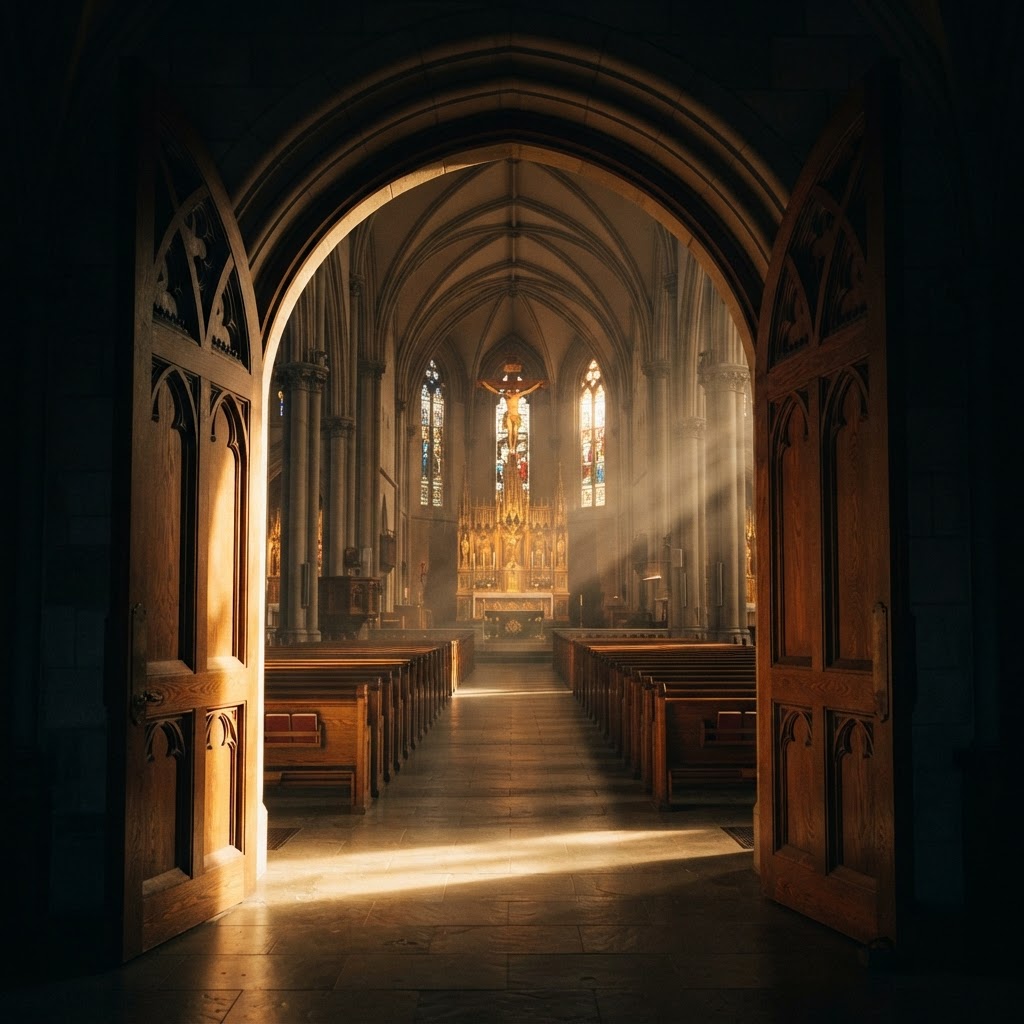
If you've ever walked into a Catholic church, you may have noticed a small basin of water near the door. You may have watched Catholics dip their fingers into it and make the Sign of the Cross as they enter.
That water is called holy water. And behind that simple gesture is one of the oldest and most meaningful traditions in the Catholic Church.
If you are new to Catholicism, you might naturally wonder: What is it? Why is it holy? Does the water itself have power? And why do Catholics use it when they walk into church?
Those are good questions.
Holy water is not magic. It is not a lucky potion. Catholics do not believe the water has supernatural power of its own. It is a sacramental — a sacred sign that helps turn our hearts and minds toward God.
And behind this simple drop of water is the deepest truth of the Christian life: that we have been washed, made new, and welcomed into God's family through Baptism.
What Is Holy Water?
Holy water is water that has been blessed by a priest. The blessing usually includes the addition of a small amount of salt — an ancient symbol of preservation and wisdom — and a prayer asking God to make the water a sign of His grace.
That's it. Simple water. A simple blessing. But in the Catholic tradition, that simplicity carries deep meaning.
Water is one of the most powerful symbols in the Bible. It gives life. It cleanses. It saves. From the waters of creation (Genesis 1) to the waters of Baptism (John 3), God has used water to speak of new life, forgiveness, and grace. Holy water carries that symbolism into the daily life of the Catholic.
But Is Holy Water Magic?
No. This distinction is extremely important.
Holy water is not a Catholic version of a lucky charm. The Catholic faith condemns superstition — the idea that an object possesses some magical power independent of God. The water points beyond itself.
Think about a photograph of someone you love. The paper itself is not the person. But the photograph reminds you of them, and looking at it can turn your heart toward them. Holy water works similarly. The water is not God. But it reminds us of God's grace, of our Baptism, and of our call to live as His children.
Holy water has power only insofar as it leads us toward God. And that is exactly what it does.
Is Holy Water Magic?
No.
Holy water has no magical power. Catholics trust in God alone. It is a sacramental that reminds us of Baptism and asks for God's blessing and protection.
What Is a Sacramental?
The Catholic Church uses the word sacramental for certain sacred signs and devotional objects that help prepare us to receive God's grace and live our faith more deeply.
- ✦ Crucifixes
- ✦ Holy water
- ✦ Blessed palms
- ✦ Rosaries
- ✦ Scapulars
- ✦ Sacred medals
Sacramentals are different from the seven Sacraments instituted by Christ. Holy water does not replace Baptism. It does not replace Confession. It does not replace the Eucharist. And it certainly does not replace a relationship with Jesus Christ.
Instead, sacramentals help direct our attention toward God and remind us to live the faith we profess.
Why Do Catholics Use Holy Water?
When a Catholic dips their fingers into holy water and makes the Sign of the Cross, they are doing something simple but profound: they are remembering their Baptism.
Baptism is the moment a person becomes a Christian — washed clean of sin, born again as a child of God, and welcomed into the Church. Every time a Catholic uses holy water, they recall that moment. They remember who they are. They remember whose they are.
Holy water is also used in blessing. A priest may sprinkle holy water over a congregation, a home, a new object, or a person, asking God to bless what is touched. It is a physical way of praying: Lord, be present here. Make this holy. Protect and bless.
Holy Water in Scripture
Water runs through the Bible from the first page to the last. God uses it to create, to save, to cleanse, and to give life. Holy water carries that biblical symbolism into Catholic devotion.
Does Holy Water Wash Away Sin?
No. This is an important distinction.
Only the Sacraments — especially Baptism and Confession — forgive sins. Holy water is a reminder of Baptism, not a replacement for it. It does not wash away sin on its own.
But holy water can help prepare our hearts. When we use it prayerfully, it can stir us to repentance, remind us of God's mercy, and encourage us to turn back to Him. It is a sign that points us toward the Sacraments — not a substitute for them.
Can I Keep Holy Water at Home?
Yes. Many Catholic families keep a small font or bottle of holy water at home. It can be placed near a prayer corner, a crucifix, or the entrance of the home. Some families use it to bless themselves and their children at the start or end of the day.
You can usually obtain holy water from your local Catholic parish. Many churches have a container near the entrance where visitors are welcome to take some. Simply bring a small bottle and fill it.
Using holy water at home is a simple way to make the ordinary moments of life sacred — to pause, to remember God, and to ask for His blessing.
Do I Need to Be Catholic to Use Holy Water?
No. Someone who is exploring Christianity or considering becoming Catholic can certainly use holy water. In fact, it can become a simple invitation to prayer. You don't have to understand every Catholic teaching before beginning to ask God to lead you.
You can simply pray: “Jesus, wash me. Forgive me. Make me new. If the Catholic faith is where You are leading me, show me. Give me the courage to follow the truth wherever it leads.” That is a beautiful place to begin.
A Simple Prayer
If you're using holy water, you don't need an elaborate prayer. A simple prayer as you make the Sign of the Cross is a wonderful place to start:
In the name of the Father,
and of the Son,
and of the Holy Spirit.
Lord, wash me clean and lead me home.
Then speak to Jesus. Tell Him what you're afraid of. Tell Him where you've failed. Tell Him what you don't understand. Ask Him for forgiveness. Ask Him for faith. Ask Him to show you the truth. And then be willing to follow where He leads.
Holy Water Always Leads Beyond Itself
Holy water isn't really about the water. It points toward something much bigger. The water points toward Baptism. Baptism points toward Christ. And Christ points us toward the Father. Through Christ, we are invited into a life of grace — through faith, repentance, the Sacraments, prayer, and life within His Church.
So the next time you see a Catholic dip their fingers into holy water and make the Sign of the Cross, don't think of it as a superstition. Think of it as a tiny prayer: Lord, I remember what You have done for me. Wash me. Bless me. Lead me home.
Want to Learn More?
The Seven Sacraments
Holy water reminds us of Baptism. Learn about all seven Sacraments instituted by Christ.
Explore the Sacraments →The Miraculous Medal
Explore another beloved Catholic sacramental — a small medal that reminds us to trust in God.
Explore the Medal →The Brown Scapular
Discover another sacramental — two pieces of cloth and a devotion to Our Lady of Mount Carmel.
Explore the Scapular →How Do I Become Catholic?
If you feel God drawing you toward the Catholic Church, learn what the next steps look like.
Becoming Catholic →Are You Exploring the Catholic Faith?
You don't have to have everything figured out before walking through the doors of a Catholic church. Every Catholic journey begins somewhere.
Frequently Asked Questions
What is holy water?
Holy water is water that has been blessed by a priest. It is used in Catholic worship and devotion as a reminder of Baptism and as a sign of God's blessing, repentance, and protection.
Is holy water magic?
No. Catholic teaching rejects superstition. The water itself has no magical power. It is a sacramental — a sacred sign that helps direct our hearts toward God and reminds us of the grace of Baptism.
Why do Catholics dip their fingers in holy water when entering church?
Catholics dip their fingers in holy water and make the Sign of the Cross upon entering or leaving a church to recall their Baptism — the moment they became children of God and members of His Church.
Does holy water wash away sin?
No. Only the Sacraments — especially Baptism and Confession — forgive sins. Holy water is a reminder of Baptism and a sign of blessing, not a substitute for the Sacraments.
Can I keep holy water at home?
Yes. Many Catholic families keep a small font or bottle of holy water at home for prayer. It can be used to bless oneself, one's family, or one's home as a reminder of God's presence.
How is holy water made?
A priest blesses the water, usually adding a small amount of salt (an ancient symbol of preservation and wisdom) and praying a blessing that asks God to make the water a sign of His grace and protection.
Thinking About Becoming Catholic?
You don't have to have it all figured out before you begin.