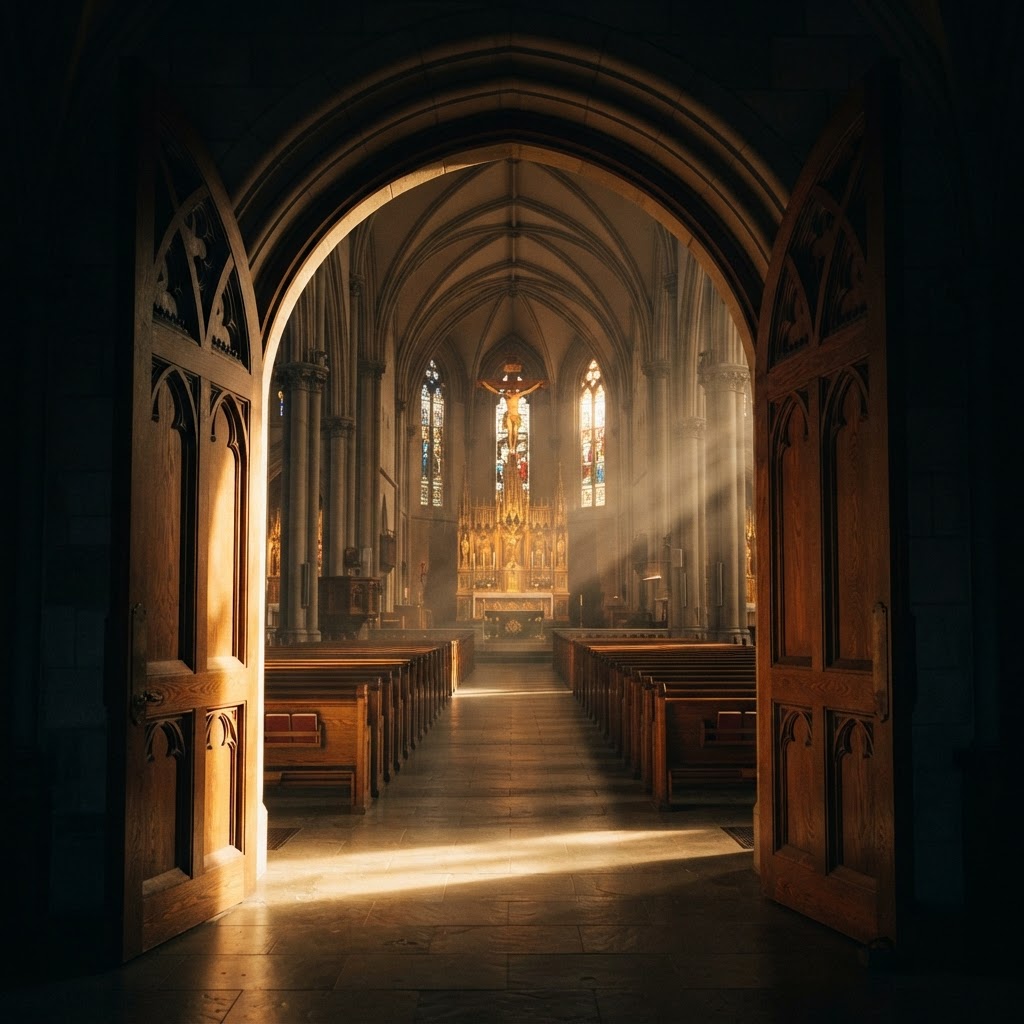
What Do Catholics Believe?
A plain-English introduction to the Catholic faith.
God
Catholics believe in one God: Father, Son and Holy Spirit. There are not three gods. There is one God in three divine Persons — the Holy Trinity.
Jesus Christ
Catholics believe Jesus Christ is truly God and truly man. He is not merely a prophet, moral teacher or religious leader. He is the eternal Son of God who became man for our salvation. He suffered, was crucified, died, was buried and rose bodily from the dead.
Salvation
Salvation is entirely dependent upon God's grace. We cannot save ourselves. God calls us to faith, conversion, Baptism, obedience and a life transformed by His grace. Catholic teaching does not reduce salvation to either 'earning heaven' or merely making an intellectual statement of belief. Saving faith is a living faith that works through love.
The Church
Catholics believe Jesus established a visible Church and entrusted His Apostles with authority to teach, sanctify and shepherd His people. That apostolic mission continues through the bishops in apostolic succession. The Bishop of Rome — the Pope — serves as successor of St. Peter and as the visible principle of unity among the bishops and faithful.
The Bible
Catholics believe Sacred Scripture is the inspired Word of God. The Catholic Church does not teach that the Bible is unimportant. Scripture is proclaimed extensively at every Mass. Catholic teaching understands divine revelation through Sacred Scripture and Sacred Tradition, authentically interpreted by the Church's teaching authority.
The Seven Sacraments
Christ works through sacramental signs to communicate grace.
Baptism
Entry into Christian life, forgiveness of sins, new birth in Christ and incorporation into His Church.
Confirmation
Strengthening the baptized through the gift of the Holy Spirit and completing baptismal grace.
Eucharist
The true Body and Blood of Jesus Christ — the source and summit of the Christian life.
Reconciliation
Christ's forgiveness of sins through the ministry of the priest.
Anointing of the Sick
Healing and comfort for those facing serious illness or old age.
Holy Orders
The ordination of bishops, priests and deacons for service to the Church.
Matrimony
The covenant of marriage between a man and a woman as a sign of Christ's love for the Church.
Is the Eucharist Really Jesus?
Yes.
Catholics believe that after the consecration at Mass, Jesus Christ is truly present — Body, Blood, Soul and Divinity — under the appearances of bread and wine. The Eucharist is not understood merely as a symbolic reminder.
Do Catholics Worship Mary?
No.
Worship belongs to God alone. Catholics honor Mary because she is the Mother of Jesus Christ, the Mother of God incarnate, and the greatest model of Christian discipleship. Catholics ask Mary to pray for them just as Christians ask one another for prayer — but with recognition of her unique relationship to Christ.
The Saints
Intercession, Not Replacement
Catholics do not believe the saints replace Jesus. The saints are members of Christ's Body who have completed their earthly journey and live with Him. Catholics ask their intercession while worshipping God alone.
Purgatory
Purification, Not a Second Chance
Purgatory is not a second chance after rejecting God. It is the final purification of those who die in God's grace and friendship but still require purification before entering the fullness of Heaven.
Heaven and Hell
Eternal Reality
God created us for eternal communion with Him. Heaven is eternal life with God. Hell is definitive separation from God. Human freedom and our response to God's grace matter.
Moral Life
Faith That Lives
Catholic Christianity affects how a person actually lives. Faith concerns sexuality, marriage, family life, care for the poor, human dignity, forgiveness, justice, honesty, life, work, money and responsibility toward others. Catholicism is not merely Sunday worship.
Continue Studying
For deeper study, consult the Catechism of the Catholic Church and official Church documents.
Thinking About Becoming Catholic?
You don't have to have it all figured out before you begin.