Lanciano, 750 D.C.
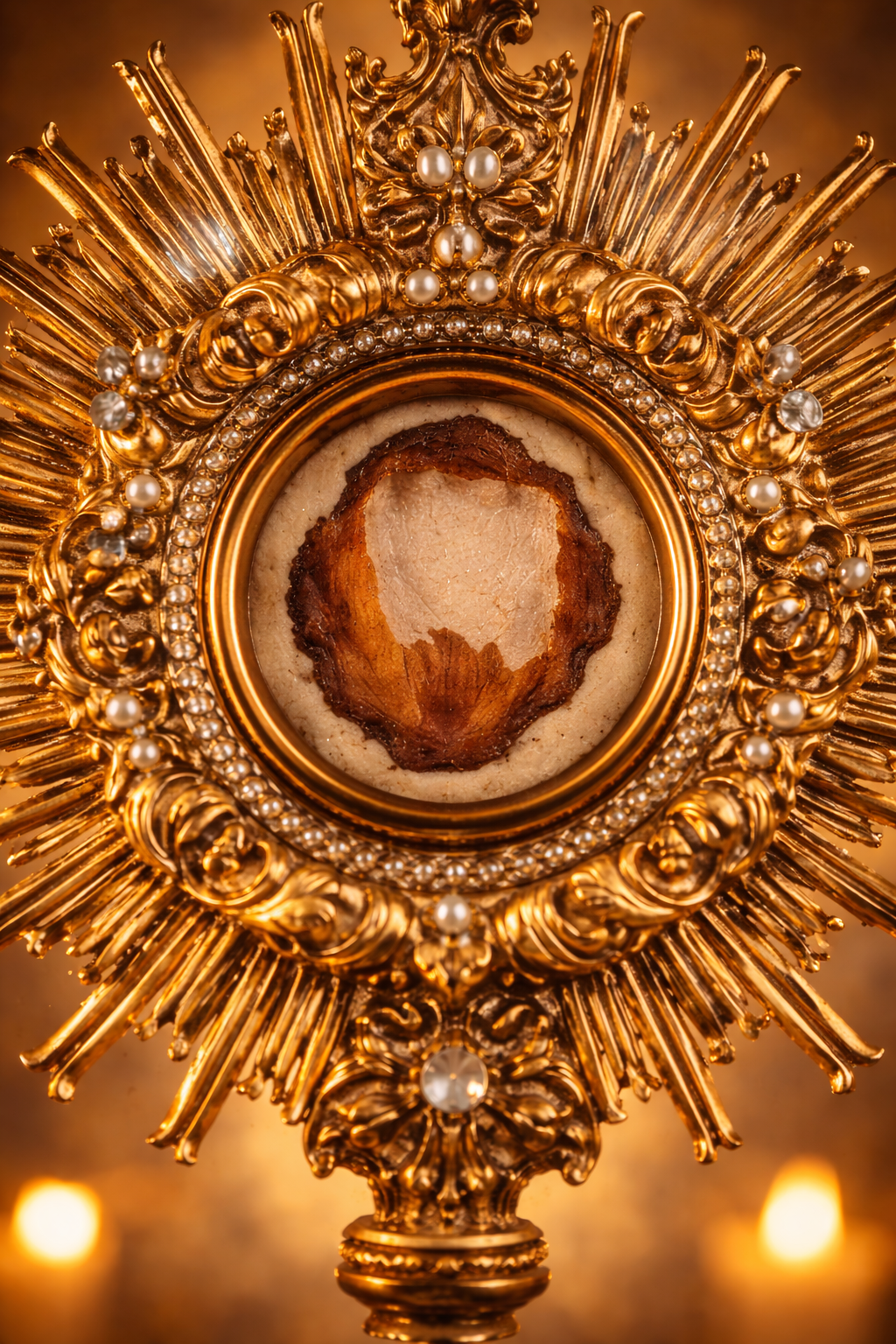
The Eucharistic host relic of the miracle of Lanciano, displayed in an ornate monstrance. Photo: Way2Eucharist · Source
The account
In the Italian town of Lanciano, tradition preserves an account from the eighth century in which a priest who doubted the Real Presence is said to have witnessed the consecrated bread and wine become visibly flesh and blood. The relics, preserved in the Church of San Francesco, have been venerated for centuries and remain a focus of pilgrimage and devotion.
Historical accounts of the event vary in detail, and the earliest written sources date from long after the tradition is said to have occurred. Scientific studies of the relics were conducted in the 1970s and 1980s, reporting that the flesh appears to be cardiac tissue and the blood is of type AB. These findings have been widely shared, though laboratory analysis does not itself constitute a Church declaration of supernatural origin.
The Church has not issued a formal decree declaring the event supernatural. Devotion to the relics of Lanciano has been sustained by the local Church and by pilgrims across the centuries. The case is included in Saint Carlo Acutis's exhibition as one of the oldest known Eucharistic miracle traditions. Visitors to Lanciano can venerate the relics and reflect on the mystery of the Real Presence.
What the Church has said
No formal decree declaring the event supernatural has been located. The relics have been venerated for centuries under the care of the local Church, and the tradition is recognized in Saint Carlo Acutis's exhibition.
Visit and pray
Church of San Francesco, Lanciano
What would it mean to see the Eucharist with new eyes, even without an extraordinary sign?
Sources
Last reviewed: October 4, 2026